Residents of Gulbarga Fort
Srishti Institute of Art, Design, and Technology
2018
Community Design
Participatory Research
Objective
Design a participatory toolkit that brings together three stakeholders with opposing interests around a heritage conflict, giving each an equal platform to reframe the conversation through empathy rather than hostility.
Outcome
A six-activity, colour-coded interactive toolkit designed for facilitated use across three stakeholder groups. Built but not deployed due to funding and translation constraints.
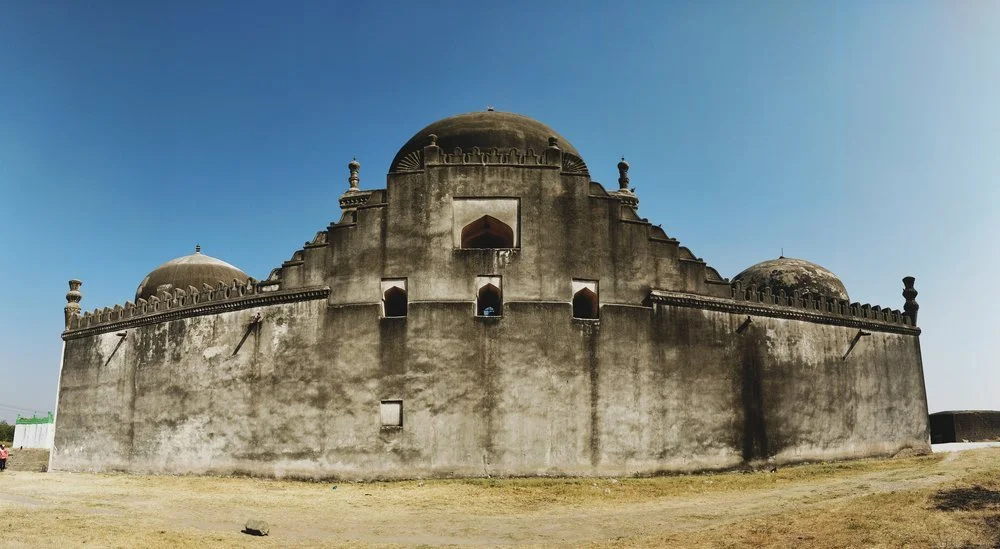
The conflict
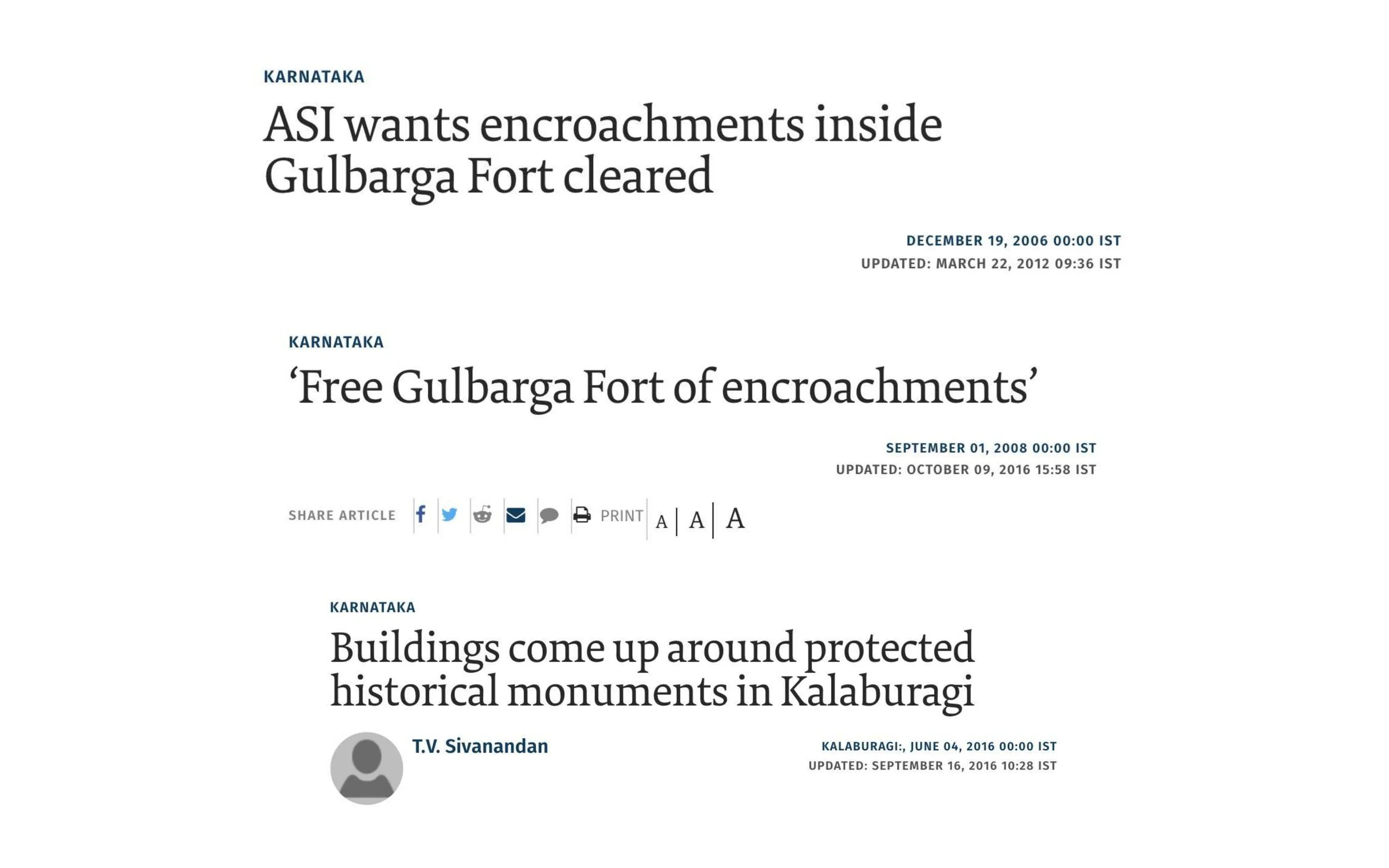
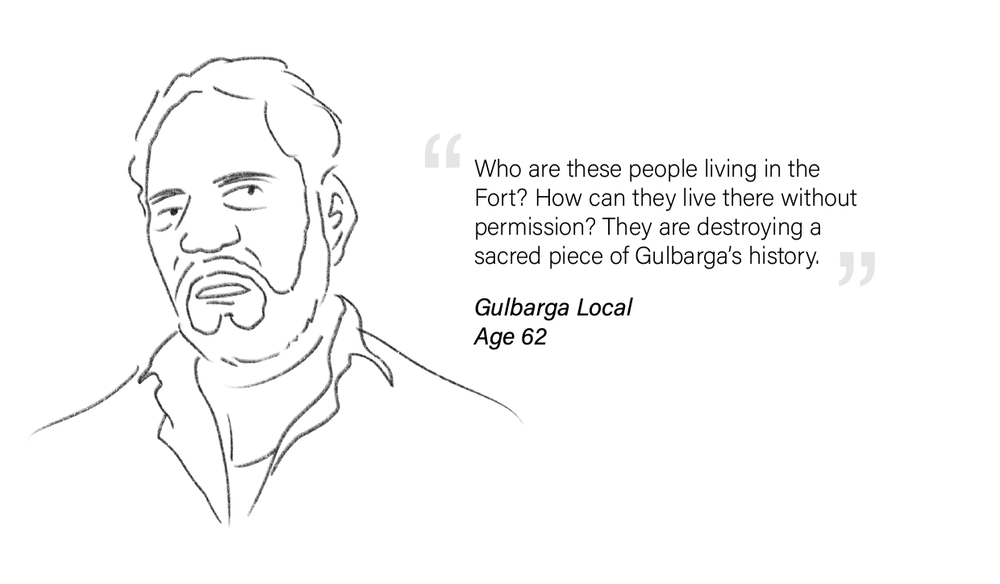
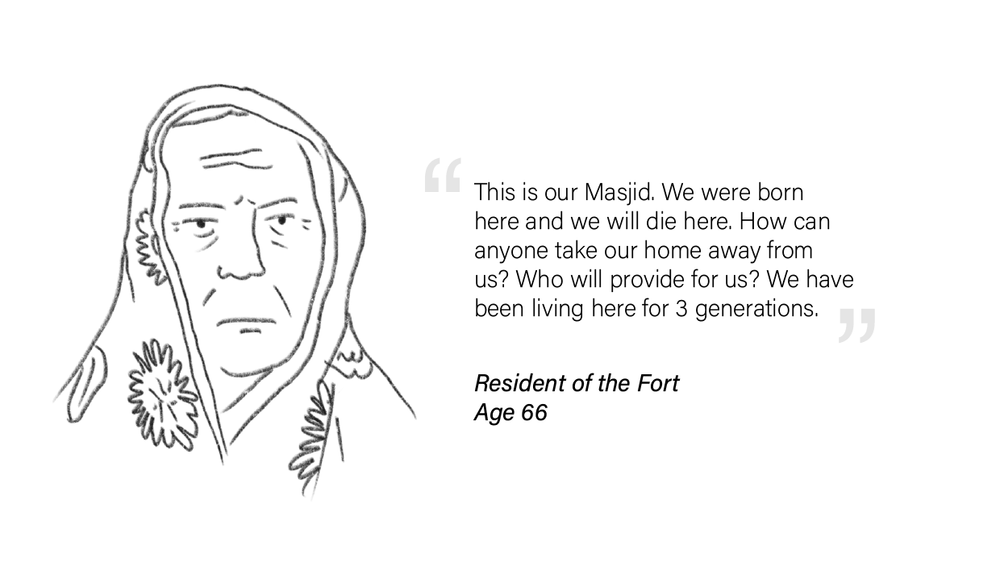
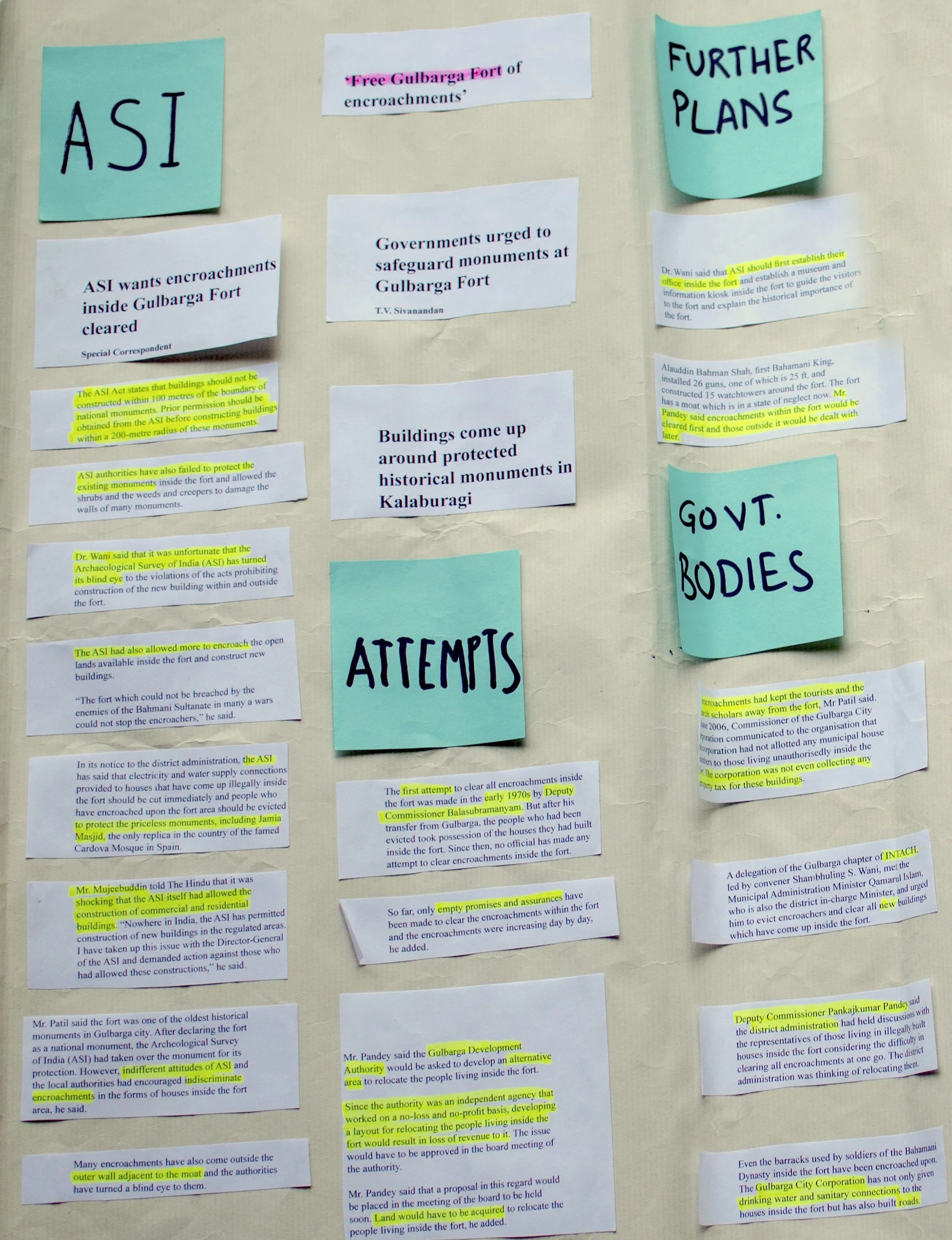
Over 200 families have lived inside the walls of Gulbarga Fort for more than three generations. When the Archaeological Survey of India (ASI) took control of the Fort, these families were officially labelled as encroachers. Eviction plans followed. Media coverage turned public sentiment against the residents, and the locals of Gulbarga began to side with the authorities. The conversation became hostile, one-sided, and politically charged.
The problem had been viewed through social, religious, and political lenses. It had never been viewed through a human one.
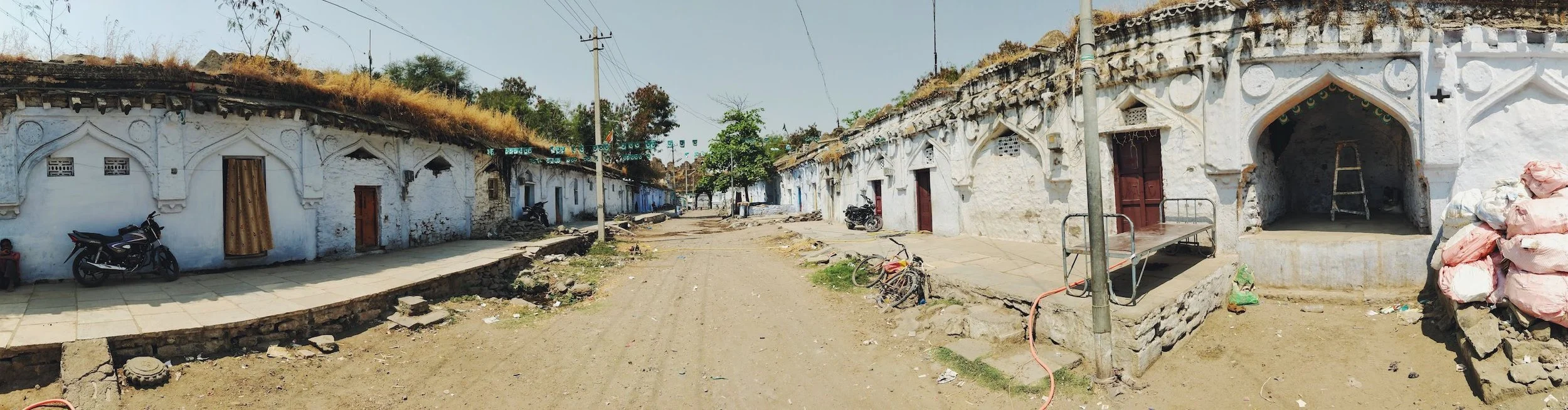
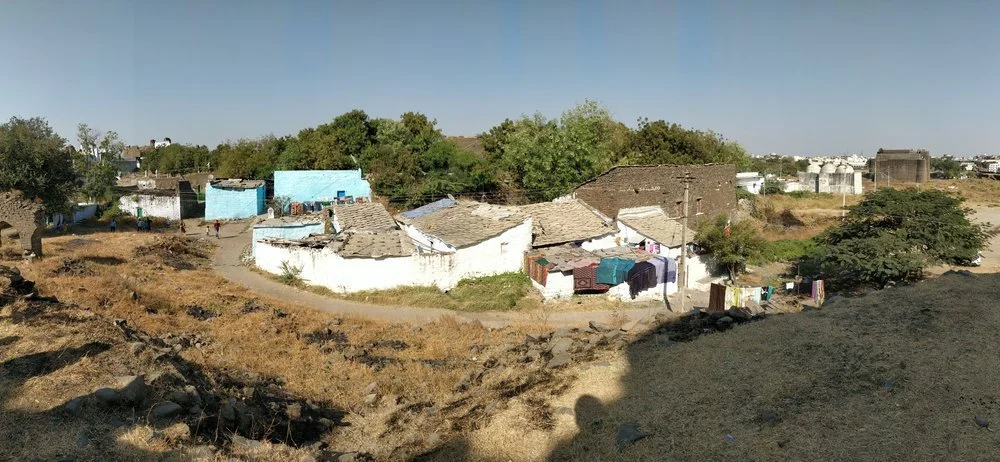
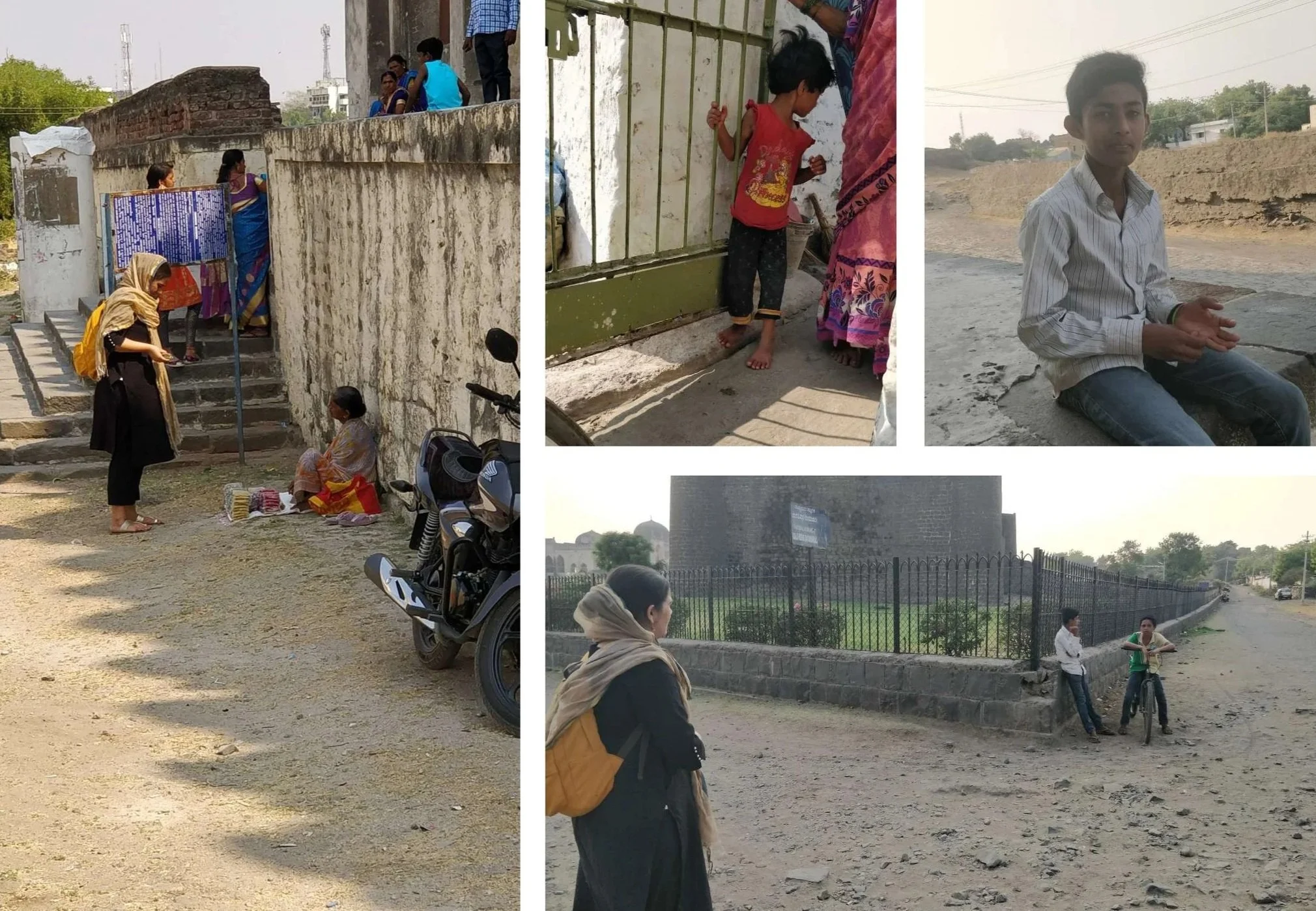
The research
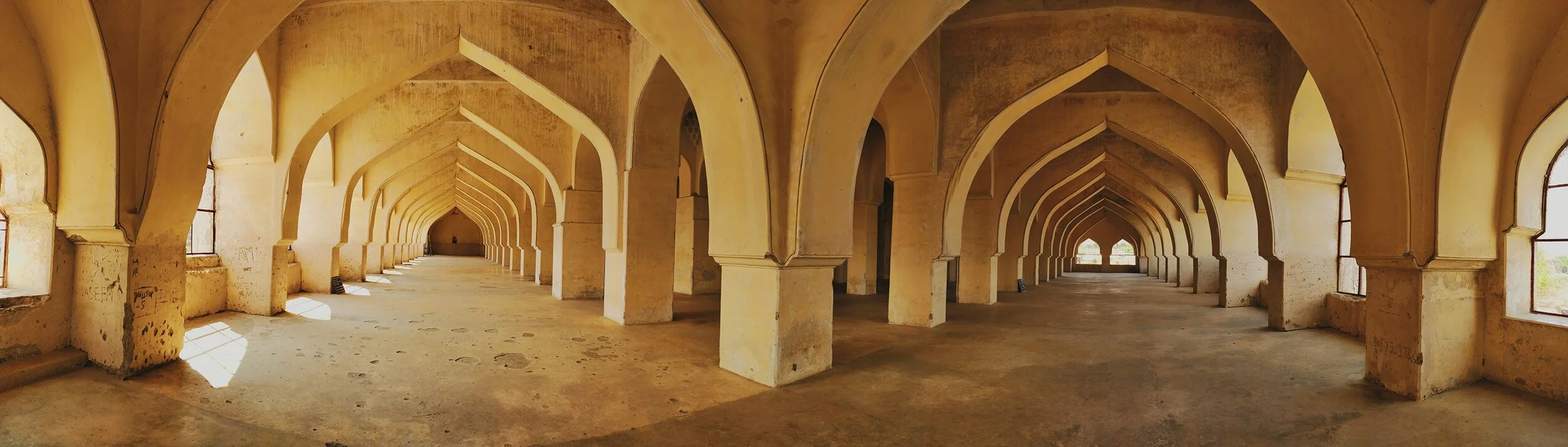
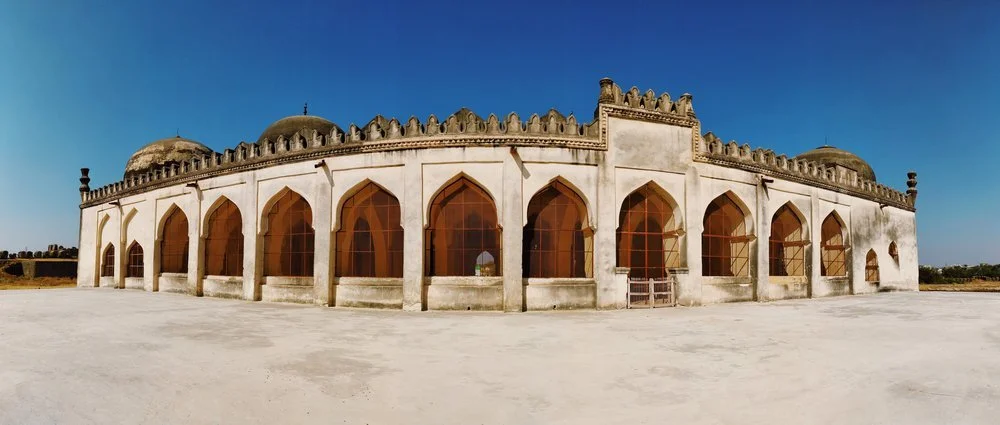
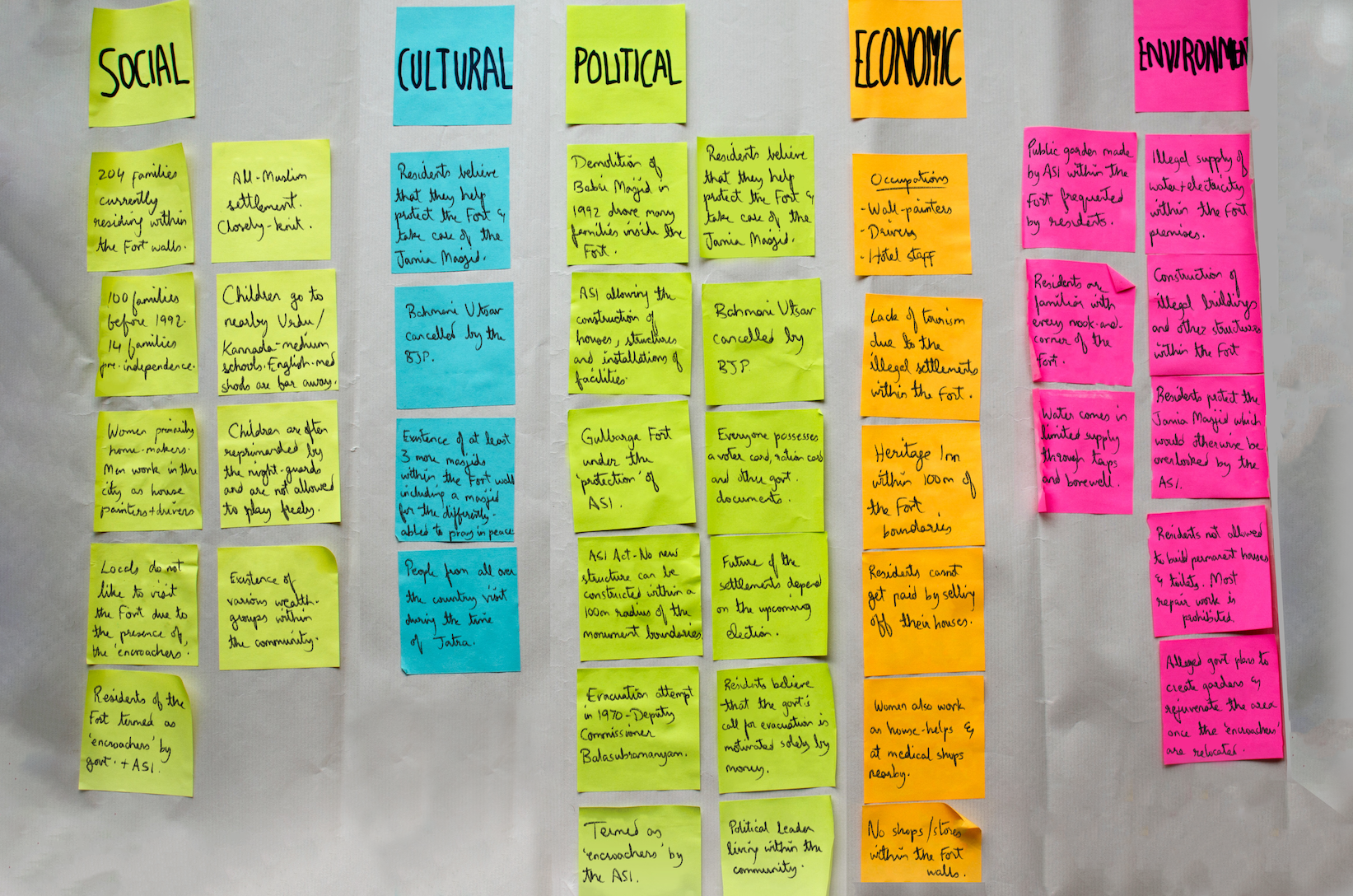
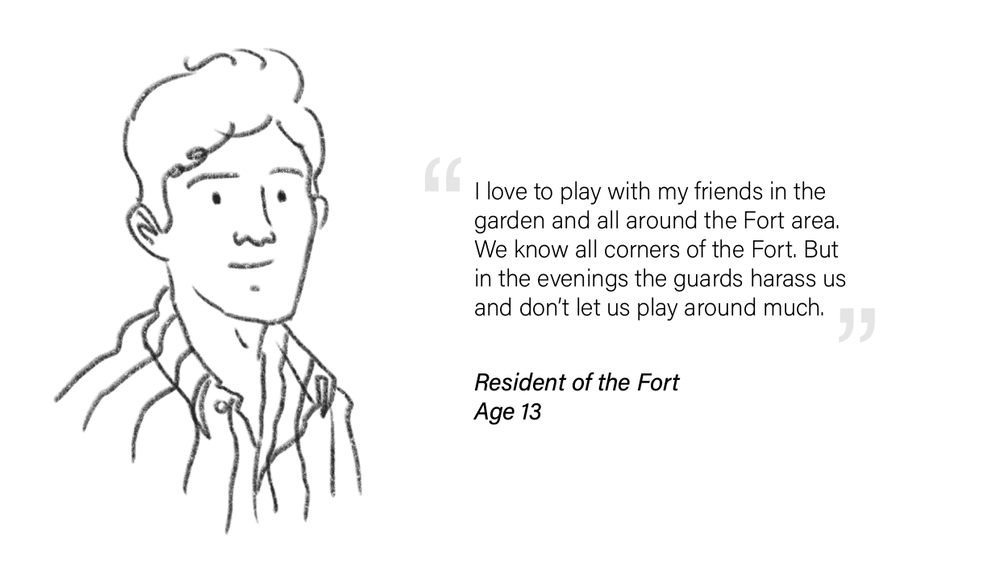
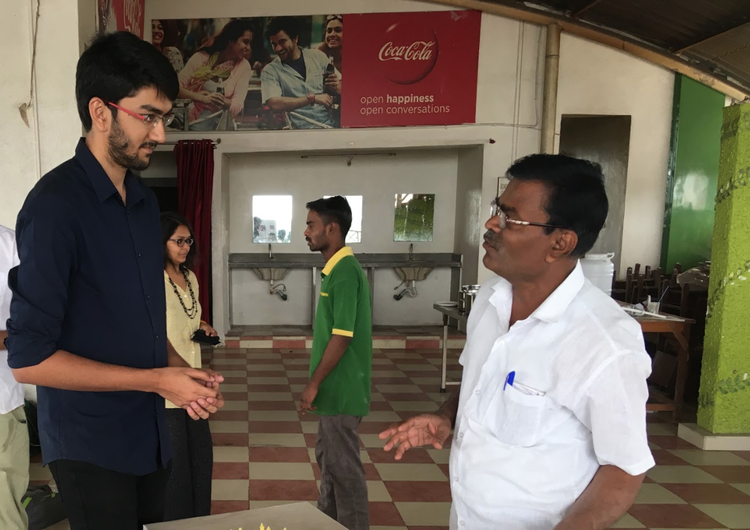
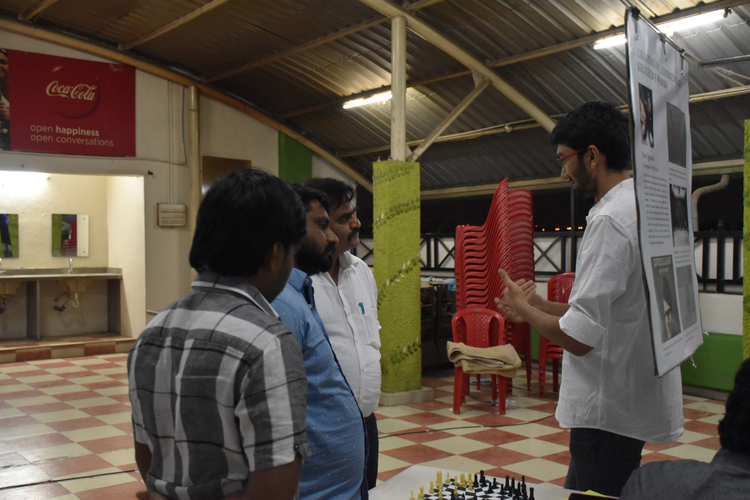
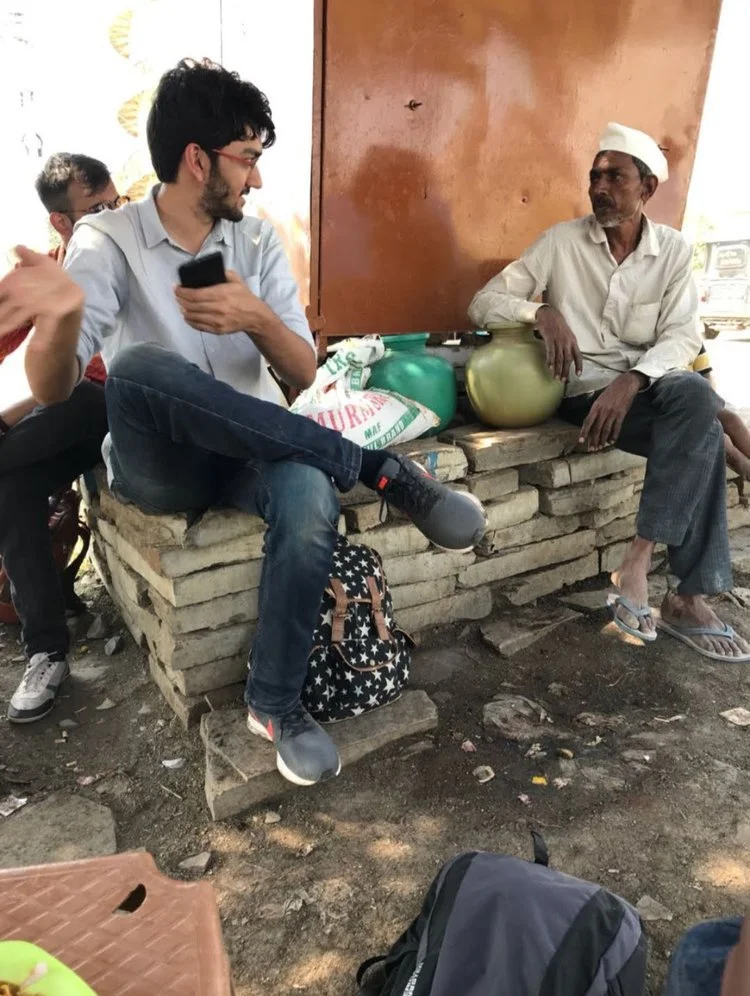
Two field visits to Gulbarga, 625km from Bangalore. Conversations with Fort residents (men, women, children), locals who live outside the walls, and community figures. Visits to the Fort interior, Jamia Masjid, surrounding heritage sites.
The research surfaced a few things:
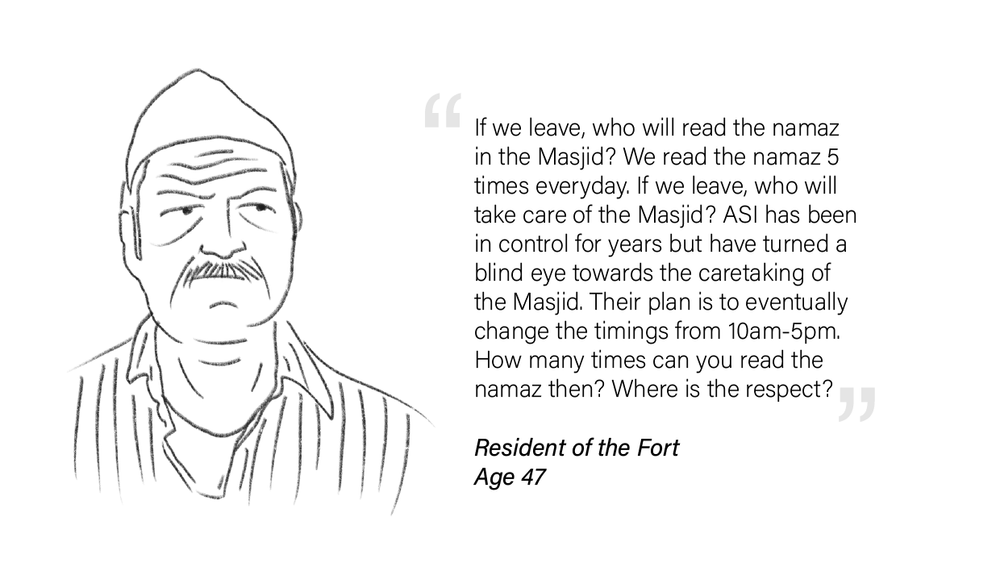
Residents had deep generational ties to the Fort and saw it as home, not as a monument they were occupying.
Some residents acknowledged damage to the structure and wanted better lives for their children elsewhere.
The locals' hostility was shaped by media framing, not firsthand understanding.
ASI's preservation goals were not without merit.
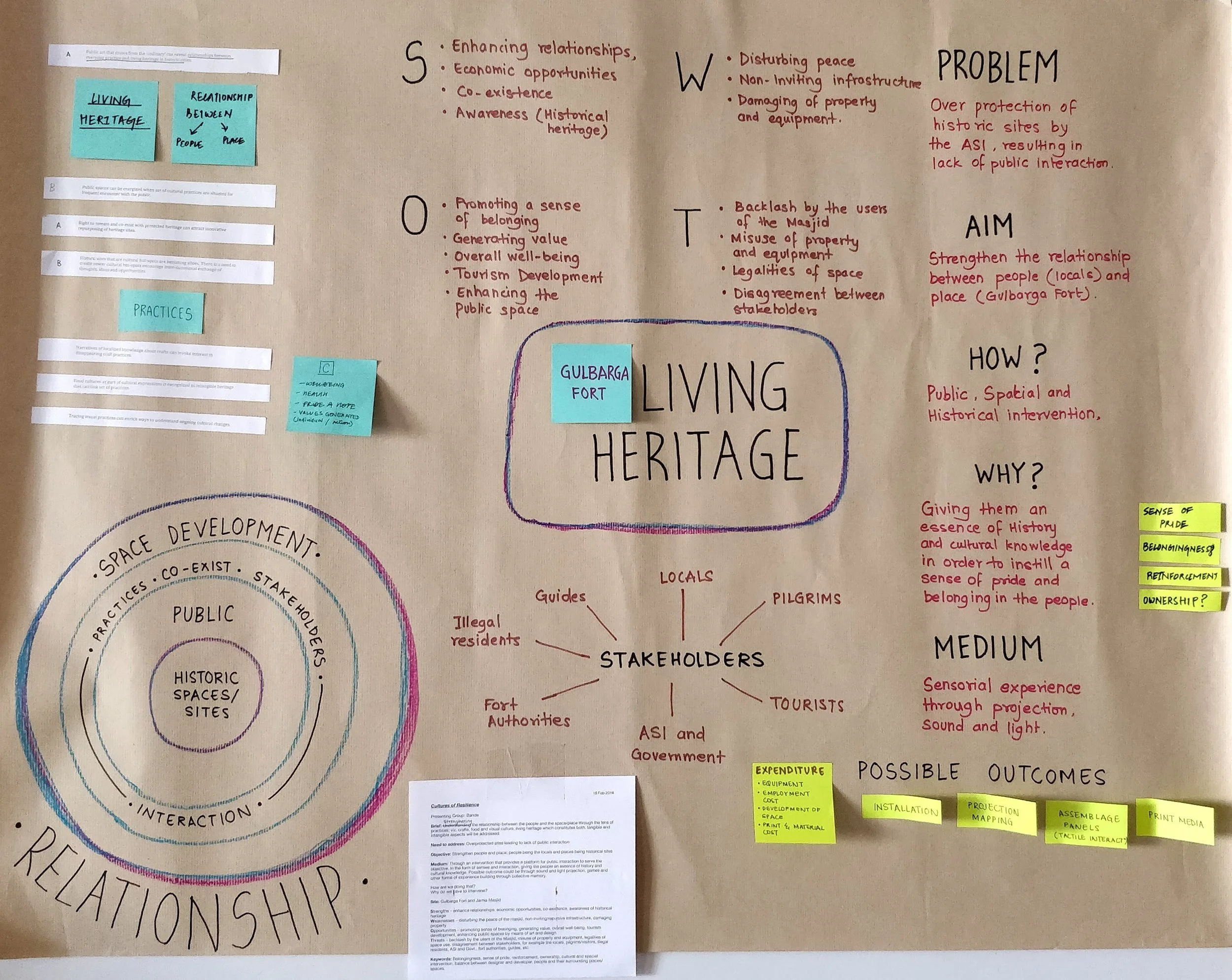
No stakeholder had the full picture. No platform existed for them to hear each other.
As a designer and outsider, I had no standing to take sides. What I could do was initiate a dialogue built on empathy rather than anger, and provide a platform where everyone gets an equal voice.
The toolkit
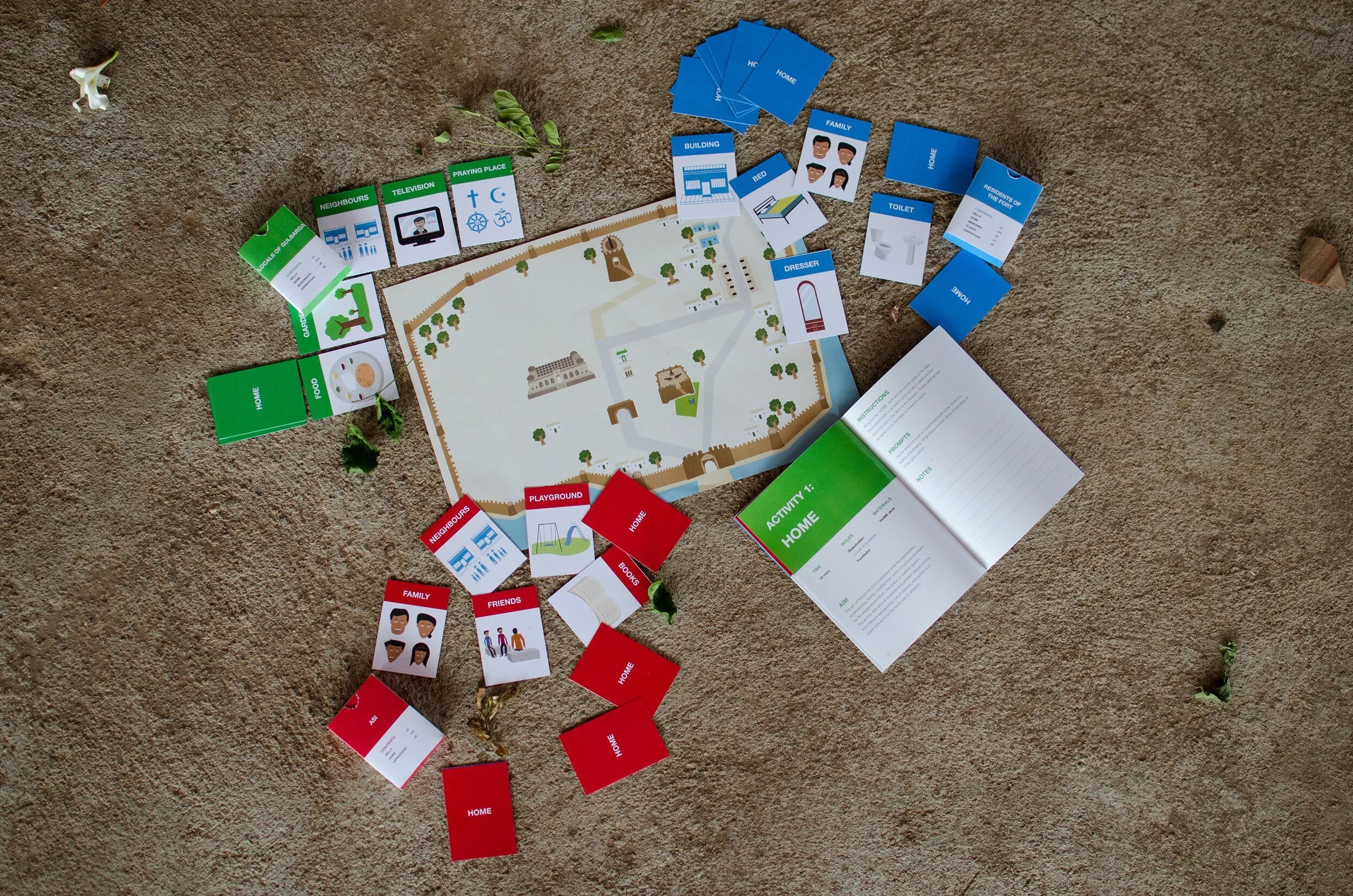
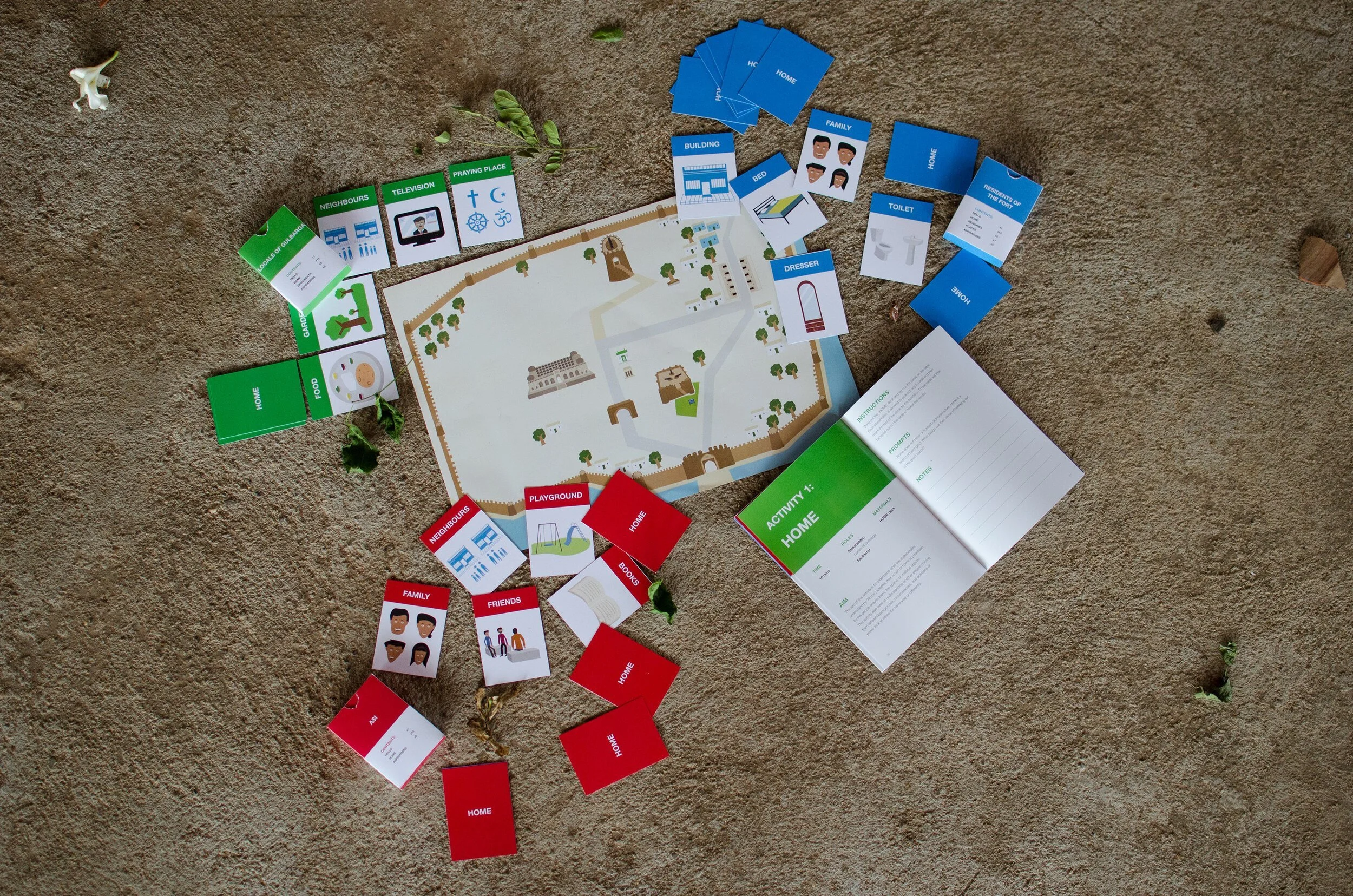
An interactive, visually driven toolkit that brings all three stakeholder groups into the same room. Each group is colour-coded: Fort residents in blue, ASI in red, locals of Gulbarga in green. A neutral facilitator guides the session using a dedicated booklet with rules, guidelines, and prompts.
What does home mean to the residents of the Fort? Can it be quantified in objects, or does it include feelings toward the Fort, the masjid, the community? Is this idea different for the other two groups?
Home
The residents' families have been here for three generations. How can their memories highlight aspects of attachment that become relatable to the other stakeholders? How do the others remember the Fort? Is their current view shaped by media and politics?
Memories
The residents know the Fort intimately. Can the other stakeholders see their knowledge and understanding of the space in a new way?
Place
What does each group want for the future of the Fort? Where do visions overlap? Can this start a different conversation about what comes next?
Aspirations
Which parts of the monument need urgent intervention? Do residents and ASI see this differently? Could there be potential for collaboration, with residents as caretakers?
Attention
How do Gulbarga's locals perceive other significant monuments in the city? What draws them to each one? Can different monuments hold different identities?
Monument
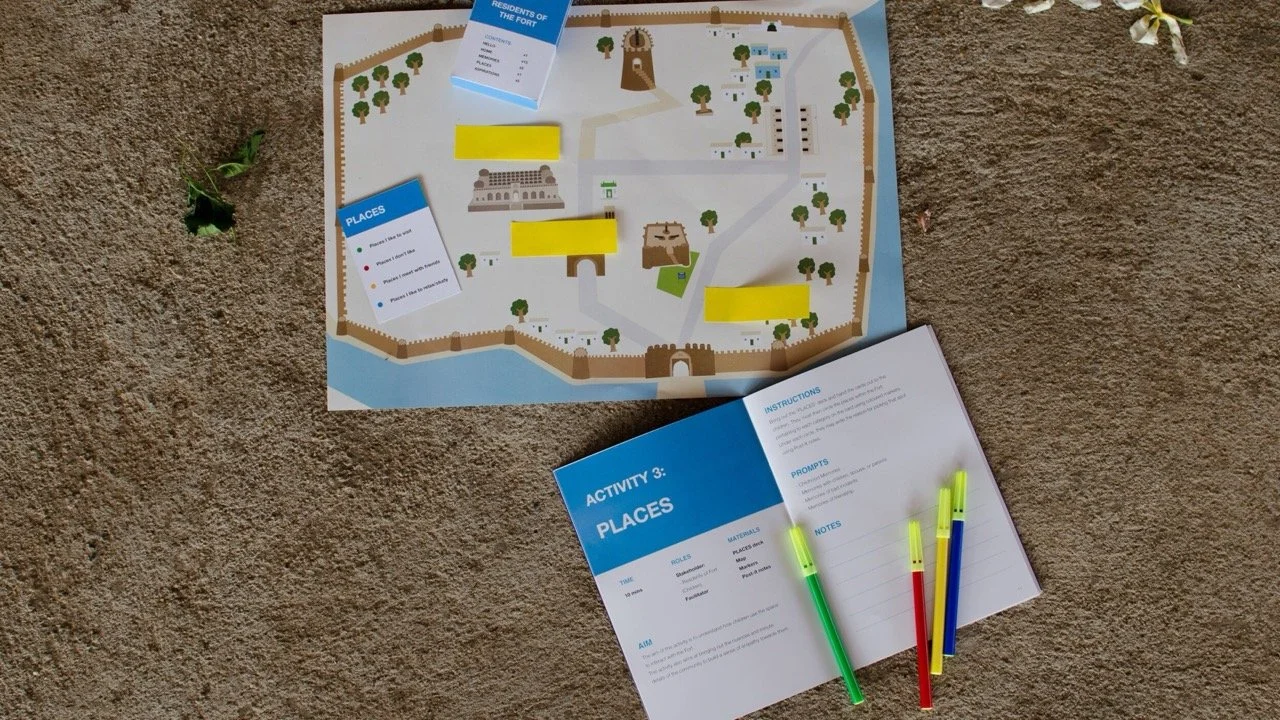
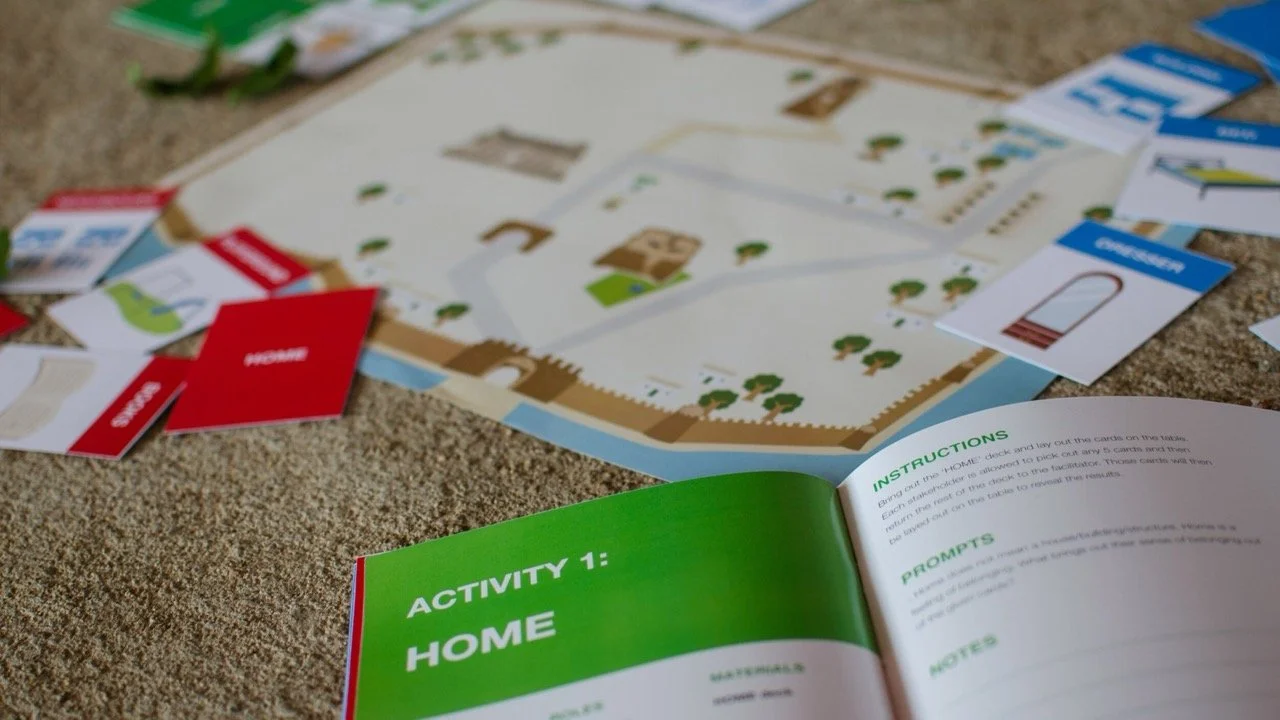
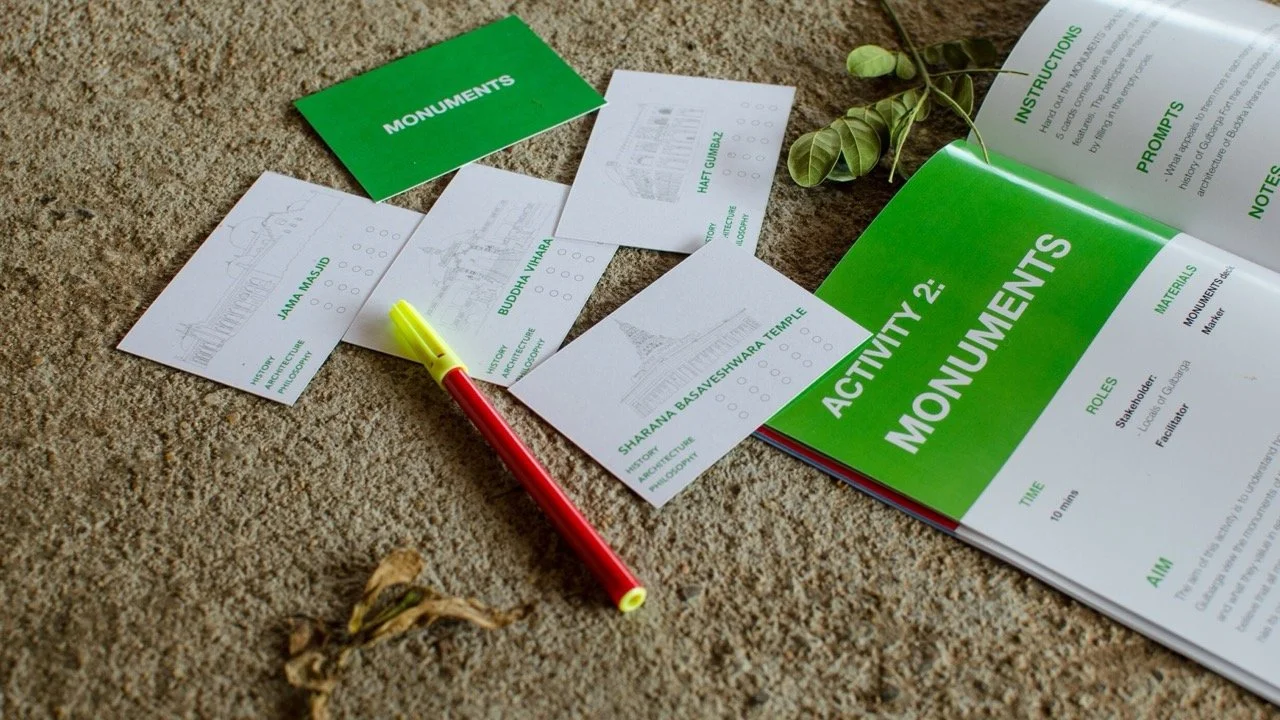
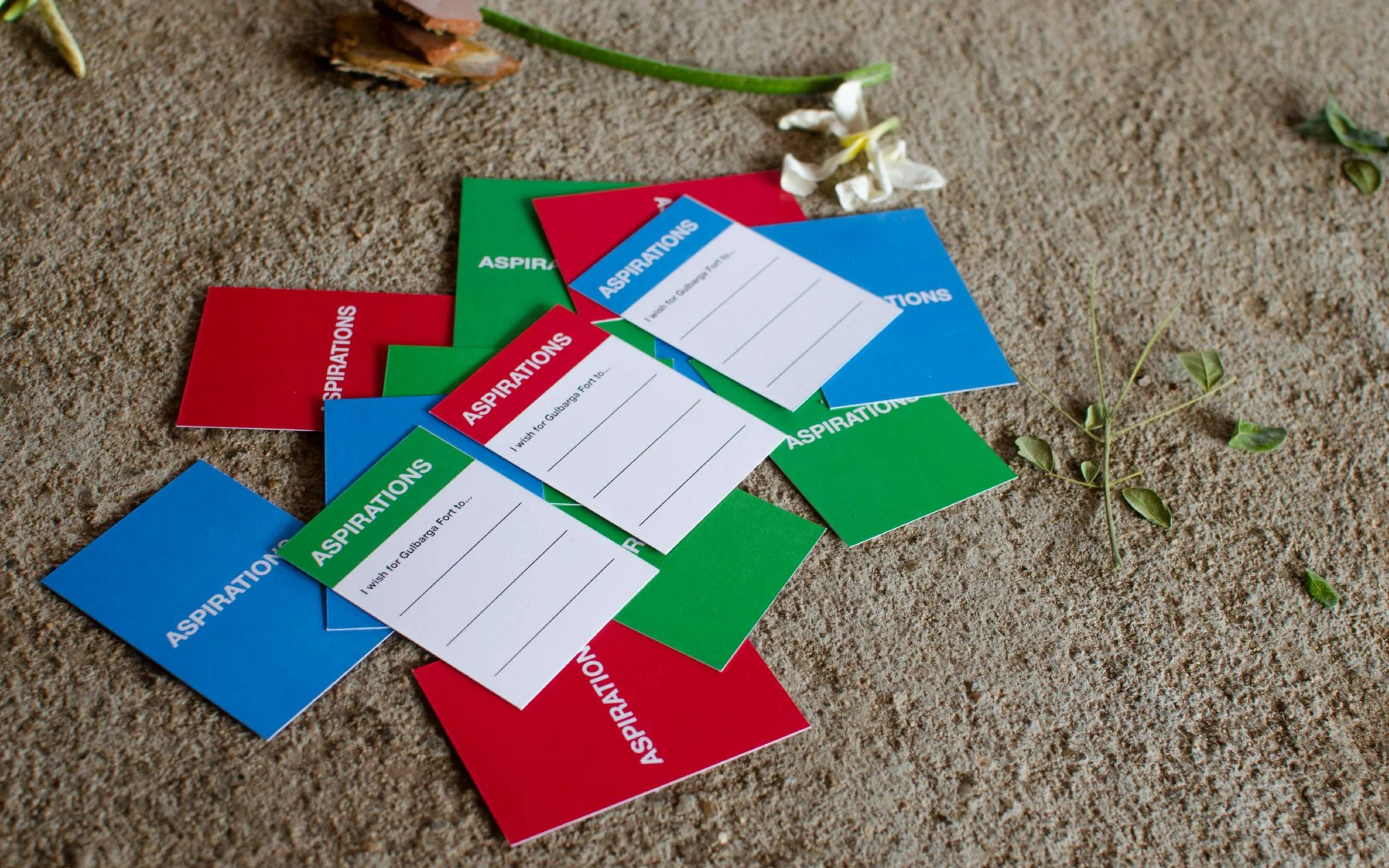
Some tasks are done individually by each stakeholder group. Others are done together. The structure moves from personal reflection to shared dialogue.
Status
The toolkit was designed but never deployed. Taking it forward required funding for production and translation into Hindi, Urdu, and Kannada. The project remains a concept.
Collaborators
Executed from Srishti Institute of Art, Design, and Technology in collaboration with UNESCO Chair in Culture, Habitat, and Sustainable Development India, Deccan Studies, Team YUVAA, and Aga Khan Trust for Culture.